

Table of Contents
Introduction
Nestled in the heart of Sikh communities across India and the world, Gurudwara Shri Guru Singh Sabha stands as one of the most revered and visited Sikh shrines — a symbol of unwavering faith, community service, and the timeless teachings of the Gurus. Whether you are a devout Sikh, a spiritual traveller, or simply someone curious about one of the world’s most inclusive religions, a visit to Gurudwara Shri Guru Singh Sabha is an experience that touches the soul.
In this guest post, we explore the history, significance, architecture, spiritual practices, and community services that make Gurudwara Shri Guru Singh Sabha a truly special place of worship.
The Meaning Behind the Name
To understand the sanctity of this Gurudwara, it helps to first understand its name:
- Gurudwara — Literally translating to “Gateway to the Guru,” a Gurudwara is a Sikh place of worship open to people of all faiths, backgrounds, and walks of life.
- Shri — An honorific prefix denoting reverence and holiness.
- Guru Singh Sabha — Meaning “the congregation (Sabha) of the Lion (Singh) of the Guru.” The Guru Singh Sabha movement itself was founded in the late 19th century as a reformist movement to revive Sikh identity, education, and religious practices. Today, Gurudwaras bearing this name carry forward that legacy of community, learning, and devotion.
Historical Background
The Guru Singh Sabha movement was born in Amritsar in 1873, during a period when Sikh identity was under threat from colonial influences and competing missionary activities. The founding of the Singh Sabha was a renaissance moment for the Sikh community — a collective resolve to preserve the Gurbani (sacred scriptures), promote Punjabi language and literature, and reaffirm the distinct identity of Sikhs.
Gurudwaras named Shri Guru Singh Sabha draw their inspiration from this powerful legacy. Many of these Gurudwaras were established in the 20th century, both in Punjab and across Sikh diaspora communities around the world — from the UK to Canada, from Singapore to Kenya — serving as anchors of Sikh faith and Punjabi culture wherever Sikhs have settled.
Architectural Splendour
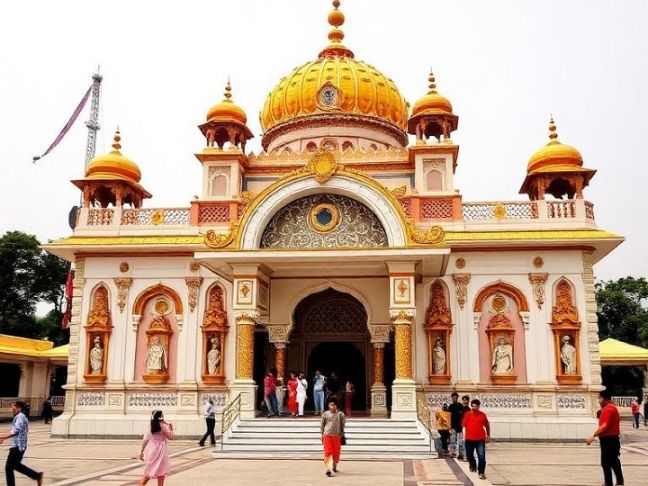
One of the first things that strikes visitors about Gurudwara Shri Guru Singh Sabha is its magnificent architecture. Sikh Gurudwara architecture is a blend of Punjabi, Mughal, and Rajput styles, characterised by:
The Nishan Sahib (Sacred Flag) Every Gurudwara proudly flies the triangular saffron flag called the Nishan Sahib, bearing the Khanda symbol. It is visible from a distance and serves as a beacon, welcoming all who seek spiritual solace.
The Darbar Sahib (Main Hall) The central prayer hall, or Darbar Sahib, is the heart of the Gurudwara. Here, the Guru Granth Sahib — the eternal living Guru of the Sikhs — is enshrined on a majestic palki (palanquin) adorned with flowers, silks, and gold embroidery. The hall resounds with the melodious recitation of Gurbani (sacred hymns), creating an atmosphere of deep peace and reverence.
The Sarovar (Sacred Pool) Many significant Gurudwaras feature a Sarovar — a sacred pool of water — where devotees bathe or wash their hands and feet as an act of purification and humility before entering the Darbar Sahib.
Marble Inlay and Gold Work The floors are typically lined with pristine white marble, and the walls are often adorned with intricate floral and geometric patterns. Gold-leaf embellishments and mirrored mosaic work add to the grandeur.
Spiritual Practices and Daily Rituals
Life at Gurudwara Shri Guru Singh Sabha revolves around a rich tapestry of daily rituals and spiritual practices rooted in the teachings of the Ten Sikh Gurus.
Nitnem — The Daily Prayers
The day begins before dawn with the recitation of Nitnem — a set of daily prayers including Japji Sahib, Jaap Sahib, and Tav-Prasad Savaiye. The morning air fills with the chanting of these timeless hymns, setting a tone of gratitude and devotion for the day ahead.
Kirtan — Sacred Music
Kirtan, the congregational singing of Gurbani, is the soul of every Gurudwara. Highly skilled Ragis (musicians) perform Kirtan using traditional instruments like the Harmonium, Tabla, and Dilruba. The music is not merely entertainment — it is a form of meditation and a direct path to experiencing Waheguru (the Divine).
Ardas — The Sikh Prayer
Ardas is a formal Sikh prayer recited standing, with hands folded, in the presence of the Guru Granth Sahib. It is offered at key points during the day and at the conclusion of all religious ceremonies. Ardas reminds the congregation of the sacrifices of the Gurus and the Sikh martyrs and seeks blessings for all of humanity.
Hukamnama — The Divine Command
After Ardas, a Hukamnama is taken — a random opening of the Guru Granth Sahib to receive the day’s divine guidance. This sacred practice connects the congregation to the living wisdom of the Gurus.
Degh — The Sacred Offering
Degh refers to the sacred sweet pudding (Karah Prasad) made from equal parts wheat flour, sugar, ghee, and water. It is prepared with prayers and distributed as blessed food to all present, symbolising equality and the grace of the Guru.
Langar: The Community Kitchen
Perhaps the most powerful expression of Sikh values at Gurudwara Shri Guru Singh Sabha is the Langar — the free community kitchen.
Established by Guru Nanak Dev Ji, the founder of Sikhism, the institution of Langar is one of the most radical acts of social equality in human history. It was a deliberate challenge to the caste system and social hierarchy: at the Guru’s table, kings and commoners, rich and poor, men and women of all faiths sit side by side on the floor and eat together.
At Gurudwara Shri Guru Singh Sabha, the Langar operates every day, 365 days a year. Volunteers (Sevadars) lovingly prepare and serve simple, nourishing vegetarian meals to thousands of visitors daily — without cost, without condition, and without discrimination.
The spirit of Langar is Seva — selfless service — one of the three pillars of Sikhism alongside Naam (meditation on God’s name) and Dasvandh (sharing one’s earnings). Participating in Langar, whether as a diner or a volunteer chopping vegetables in the kitchen, is considered a deeply spiritual act.
Festivals and Special Celebrations
Gurudwara Shri Guru Singh Sabha comes alive with colour, devotion, and community spirit during major Sikh festivals:
Gurpurabs (Guru’s Anniversaries) The birthdays and martyrdom anniversaries of the Sikh Gurus are celebrated with all-night Akhand Paths (continuous 48-hour recitation of the entire Guru Granth Sahib), processions (Nagar Kirtans), and special Langar. The Gurpurab of Guru Nanak Dev Ji (usually in November) and Guru Gobind Singh Ji (usually in January) are the most widely celebrated.
Baisakhi Celebrated on April 13th or 14th every year, Baisakhi marks the Sikh New Year and the foundation of the Khalsa Panth by Guru Gobind Singh Ji in 1699. It is a day of joyful thanksgiving, community feasts, and Amrit Sanchar (initiation ceremonies).
Diwali (Bandi Chhor Divas) Sikhs celebrate Diwali as Bandi Chhor Divas, commemorating the release of Guru Hargobind Sahib Ji and 52 other prisoners from Gwalior Fort. The Gurudwara is illuminated with thousands of lights, and fireworks light up the sky.
Hola Mohalla Instituted by Guru Gobind Singh Ji as a Sikh response to Holi, Hola Mohalla is celebrated at Anandpur Sahib but observed in all Gurudwaras with martial arts displays, poetry, and spirited Kirtan.
Educational and Social Services
True to the Singh Sabha spirit, Gurudwara Shri Guru Singh Sabha is not merely a place of worship — it is a community institution. Many Gurudwaras bearing this name run:
- Gurmat Schools (Gurmat Vidyalayas): Teaching children Gurbani, Gurmukhi script, Sikh history, and classical Kirtan
- Free Medical Camps: Offering basic healthcare services to the underprivileged
- Blood Donation Drives: Regularly organising blood donation camps in the spirit of Seva
- Relief Services: Providing food, blankets, and essentials during natural disasters and times of crisis
- Elderly Care: Running programmes for senior Sikhs within the community
How to Visit Gurudwara Shri Guru Singh Sabha
Dress Code
Visitors are required to cover their heads before entering the Gurudwara. Headscarves and cotton squares are usually available at the entrance for those who need them. Shoes must be removed and deposited at the shoe room (Jora Ghar) before entering.
Conduct
Visitors of all faiths are warmly welcomed. It is customary to bow before the Guru Granth Sahib upon entering and to sit respectfully on the floor in the Darbar Sahib. Men and women generally sit on separate sides. The atmosphere is one of serene reverence.
Timing
Most Gurudwaras open before dawn for Nitnem prayers and remain open until late evening. Special services are held on Sundays and on the occasion of Sangrand (the first day of each Sikh month).
Langar
Visitors are encouraged to partake in the Langar, which is typically served during midday and evening hours. There is no charge — only the request that visitors participate with gratitude and respect.
Why Gurudwara Shri Guru Singh Sabha Matters Today
In an age of division, inequality, and spiritual searching, the message of Gurudwara Shri Guru Singh Sabha is more relevant than ever.
The Gurudwara stands as a living embodiment of Sarbat da Bhala — the Sikh prayer for the welfare of all humanity. Its doors are open to everyone regardless of religion, caste, gender, or nationality. Its Langar feeds the hungry without asking their name. Its Kirtan heals the weary soul with divine music. Its community programmes uplift the marginalised and the vulnerable.
This is not just a religious site. It is a model for how humanity can live together with dignity, compassion, and shared purpose.
Conclusion
A visit to Gurudwara Shri Guru Singh Sabha is far more than a religious excursion — it is a profound encounter with humanity’s capacity for kindness, devotion, and community. From the golden glow of the Darbar Sahib to the fragrant warmth of the Langar hall, from the soul-stirring Kirtan to the humble act of sitting together on the floor to share a meal, every moment here is a reminder of what truly matters.
Whether you arrive as a pilgrim, a tourist, or simply a curious soul, you will leave enriched — fed not just in body by the Langar, but in spirit by the timeless grace of the Guru’s house.
Waheguru Ji Ka Khalsa, Waheguru Ji Ki Fateh. (The Khalsa belongs to God, Victory belongs to God.)
Gurudwara Sri Guru Singh Sabha Sector 37 Chandigarh
About the Author: This guest post was written for devotees, travellers, and all those drawn to explore the rich spiritual and cultural heritage of Sikhism. All are welcome at the Guru’s door.