

In the Sabarkantha district of northern Gujarat, roughly 90 km from Ahmedabad and 80 km from the state capital Gandhinagar, sits a village that has quietly rewritten the rulebook on what rural India can look like. Punsari, with a population of just a few thousand people, has become a national — and even international — case study in grassroots governance, earning it the nickname “India’s first smart village.”
Walk through Punsari today and you won’t find the potholed lanes, erratic power supply, or open drains that are still common in much of rural India. Instead, you’ll see concrete roads, underground drainage, CCTV-monitored streets, and free public Wi-Fi. It’s a village that has, in the space of little more than a decade, closed much of the gap between rural and urban living standards — without losing its agrarian character or its close-knit community life.
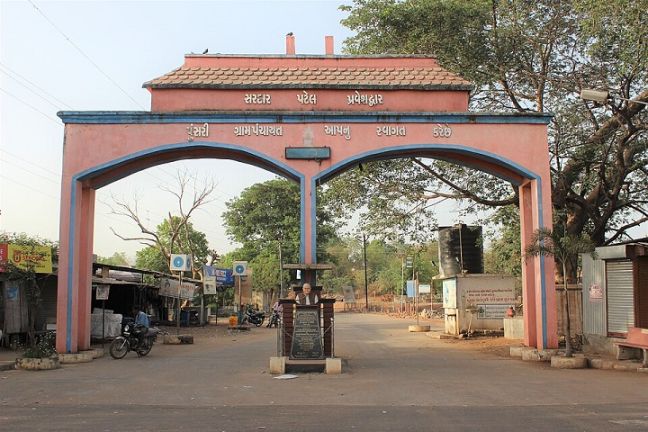
Table of Contents
Why Punsari Became Famous
Punsari’s transformation is largely credited to Himanshu Patel, who was elected village headman (sarpanch) in 2006. At the time, the Gram Panchayat’s coffers held barely ₹25,000, and the village faced the same problems as thousands of others across India: patchy electricity, unsafe drinking water, poor sanitation, and no real infrastructure to speak of.
Rather than waiting for external funding, Patel and the panchayat took a business-like approach to village administration — pooling government schemes, local revenue, and disciplined budgeting to fund one improvement after another. Within a few years, Punsari had:
- Installed a 66 KV power sub-station, giving the village round-the-clock electricity with underground cabling instead of overhead wires
- Built a reverse-osmosis (RO) plant to supply clean, safe drinking water to every household
- Laid concrete roads and a full underground sewage and drainage network
- Set up CCTV cameras across public spaces and around 120 waterproof public-address speakers for village-wide announcements
- Brought free Wi-Fi connectivity to the entire village
- Transformed the local primary school with air-conditioned, CCTV-equipped classrooms, digital smart boards, and computer labs — resulting in a zero school dropout rate
- Introduced doorstep waste collection, with a tractor-trolley collecting household garbage twice a day
- Provided health insurance coverage and free medical camps for residents, particularly those below the poverty line
This turnaround did not go unnoticed. Punsari was recognised as the best Gram Panchayat in Gujarat and later in the country, and Himanshu Patel received national honours, including being named India’s best sarpanch. The village has hosted hundreds of government officials and researchers, along with foreign delegations from countries including Kenya, who came to study whether Punsari’s model could be replicated elsewhere. It is often cited as one of the earliest and most complete examples of the “smart village” concept in India, predating the government’s own Sansad Adarsh Gram Yojana (Model Village Scheme), under which Punsari was later adopted as an ideal village.
Punsari at a Glance: Key Data
Location and Administration
- State: Gujarat
- District: Sabarkantha
- Taluka: Talod
- Governance system: Panchayati Raj — administered by an elected Gram Panchayat headed by a Sarpanch
- Distance from Ahmedabad: approx. 90 km
- Distance from Gandhinagar (state capital): approx. 80 km
- PIN code: 383307
- Official languages: Gujarati, Hindi, English
Population (2011 Census)
- Total population: approximately 5,100–6,000 (grown from around 5,500 at the time of the 2011 Census to roughly 6,000 by 2012 estimates)
- Male population: approx. 2,653
- Female population: approx. 2,447
- Total households/families: approx. 1,109
- Children (age 0–6): approx. 578, making up about 11.3% of the population
Sex Ratio
- Overall sex ratio: approx. 922 females per 1,000 males — higher than the Gujarat state average of 919
- Child sex ratio (0–6 years): approx. 914 — also higher than the Gujarat average of 890
Literacy Rate
- Overall literacy rate: approx. 79.4%, higher than Gujarat’s overall literacy rate of around 78%
- Male literacy rate: approx. 89.6%
- Female literacy rate: approx. 68.4%
- Zero dropout rate reported in the village’s primary school after infrastructure upgrades
Infrastructure and Facilities
- 24-hour electricity supply via a dedicated 66 KV sub-station with underground cabling
- Village-wide free Wi-Fi internet access
- RO-based clean drinking water supply system
- Underground sewage and drainage network
- CCTV surveillance across public areas
- 120 waterproof public speakers for community announcements
- Air-conditioned, technology-enabled primary school with CCTV and digital boards
- Primary healthcare centre and health insurance coverage for residents
- Banking facilities and a toll-free grievance/complaint redressal system
- Doorstep waste collection twice daily
Economy
- Agriculture remains the primary occupation, though the land under active farming is relatively limited
- Dairy farming is the main non-farming economic activity in the village
- Rising household prosperity is visible in ownership of vehicles, air conditioners, and modern appliances among villagers
A Model Worth Studying
What makes Punsari particularly interesting isn’t just the list of amenities it has acquired — plenty of Indian villages have received one-off grants for a school building or a water tank. What sets Punsari apart is the systemic, sustained approach to governance: transparent fund utilisation, community involvement in decision-making, and a willingness to treat the panchayat almost like a well-run local government rather than a ceremonial body.
For policymakers and researchers interested in rural development, Punsari offers a genuinely replicable template — not because every village has access to the same resources, but because its core lessons (disciplined finances, leadership accountability, and prioritising education and basic services early) don’t require extraordinary wealth to implement. As India continues to push initiatives around digital villages and rural smart infrastructure, Punsari remains one of the earliest proof points that such a transformation is possible — and that it can happen from within a village itself, rather than being imposed from outside.
Whether you’re a student of public administration, a policymaker, or simply someone curious about how far grassroots leadership can go, Punsari is worth a visit — or at least a closer look at how a village of a few thousand people quietly became a national benchmark for what “rural development” can really mean.
FAQs
1. Why is Punsari village famous?
Punsari is famous as one of India’s earliest “smart villages,” known for offering city-like amenities such as 24-hour electricity, free Wi-Fi, CCTV surveillance, RO-purified drinking water, and underground drainage. This transformation, led by former sarpanch Himanshu Patel starting in 2006, earned it recognition as the best Gram Panchayat in Gujarat and, later, in the country.
2. Where is Punsari located?
Punsari is located in Talod taluka of Sabarkantha district, Gujarat, about 90 km from Ahmedabad and 80 km from Gandhinagar, the state capital.
3. What is the population of Punsari village?
As per the 2011 Census, Punsari had a population of roughly 5,100–5,500, which grew to around 6,000 by 2012. The village has approximately 1,109 households, with a male population of about 2,653 and a female population of about 2,447.
4. What is the literacy rate and sex ratio of Punsari?
Punsari’s overall literacy rate stands at around 79.4%, higher than the Gujarat state average of about 78%. Male literacy is approximately 89.6% and female literacy about 68.4%. The village’s sex ratio is around 922 females per 1,000 males, with a child sex ratio (0–6 years) of about 914 — both above the Gujarat state averages.
5. What makes Punsari’s development model unique?
Unlike villages that receive one-time government grants, Punsari built its infrastructure through disciplined financial management, transparent use of panchayat funds, and strong local leadership — starting with a budget of just ₹25,000 in 2006. This systemic, sustainable approach is why researchers and policymakers, including foreign delegations, have studied Punsari as a replicable model for rural development.