

Jakhni is a small village in the Mahua block of Banda district, Uttar Pradesh, that turned itself from a drought-hit, migration-hit hamlet into India’s first self-declared “Jal Gram” (water village) — reviving its wells, ponds, and groundwater table entirely through community effort, without waiting for government funding. That single achievement is why a village of barely 1,600 people is now studied, visited, and replicated across the country.
In the Bundelkhand region, an area historically synonymous with drought, failed monsoons, and farmer distress, Jakhni stood out as an unlikely candidate for a success story. Yet today it draws researchers, policymakers, journalists, and officials from NITI Aayog and the Ministry of Jal Shakti who want to understand how a village with no major industry, no big budget, and no outside intervention managed to reverse decades of water scarcity using nothing more than earth, trees, and organised local labour. This guest post takes a closer look at Jakhni’s population and demographic profile, its administrative details, and the water conservation model that put it on the national map.
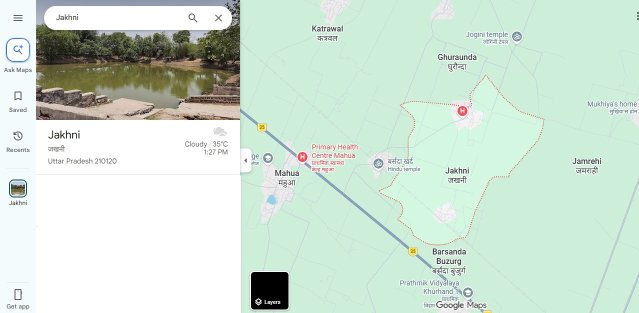
Table of Contents
Quick Facts: Jakhni Village
| Attribute | Detail |
|---|---|
| State | Uttar Pradesh |
| District | Banda |
| Block/Tehsil | Mahua (Mahuva), Atarra tehsil |
| Division | Chitrakoot |
| Region | Bundelkhand |
| PIN Code | 210120 |
| Village Code | 04821300 |
| Nearest Town | Atarra (~19–20 km) |
| Nearest City | Banda (~16–20 km) |
| Distance from Lucknow | Approx. 280–300 km |
| Local Languages | Hindi, Bundeli, Urdu |
| Nickname | “Jal Gram” / “Galgram” (Water Village) |
| Known For | Community-led groundwater and pond revival |
Population, Sex Ratio & Literacy (Census Data)
Jakhni is classified as a census village, and its demographic profile is fairly typical of small agrarian settlements in the Banda district — a modest population, a male-skewed household structure, and a literacy rate that trails the state average, especially among women.
- Total population: approximately 1,621
- Total households: around 295
- Average household size: roughly 5–6 members per household
- Female population share: about 47.1% of the village (implying a sex ratio tilted slightly toward males, consistent with the Banda district average of 863 females per 1,000 males)
- Overall literacy rate: approximately 48.7%
- Female literacy rate: approximately 18.0%
- Primary occupation: agriculture and allied activities, supplemented in recent years by income from better-irrigated land
Like much of rural Bundelkhand, the village shows a notable gender gap in literacy, reflecting broader regional educational disparities. Local leaders involved in the water conservation movement have said that stabilising farm incomes was the first priority, and that education and social development, including efforts to close the literacy gap, are the next stage of the village’s transformation. For comparison, Banda district as a whole recorded an overall literacy rate of around 68% and a sex ratio of 863 in the 2011 Census, meaning Jakhni’s literacy numbers currently sit below the district average, leaving room for continued improvement.
Administrative & Geographic Details
- State: Uttar Pradesh
- District: Banda
- Division: Chitrakoot Division
- Block: Mahua (Mahuva)
- Tehsil: Atarra
- Gram Panchayat: Jakhni is administered as its own village panchayat
- Elevation: approximately 130 metres above sea level
- Assembly Constituency: Banda
- Lok Sabha Constituency: Banda
- Nearest Railway Stations: Dingwahi and Khurhand (approx. 5 km), Banda Railway Station (approx. 15 km)
- Nearest Airport: Kanpur Airport (approx. 124 km)
- Land Use: roughly 160 hectares under irrigated farming, 223 hectares unirrigated, with the remainder under culturable waste and non-agricultural use
- Water Infrastructure: government-supplied taps, wells, tanks, tube wells, and handpumps supplement natural sources
- Local Institutions: two banks, two credit societies, and two recreational centres serve the village
- Electricity: uninterrupted 24-hour power supply from the grid
From “Water-Starved” to “Water Village”
Two decades ago, Jakhni looked like most villages in drought-prone Bundelkhand: falling water tables, dying wells, and families migrating out in search of work. That changed largely due to one resident, Uma Shankar Pandey, a farmer and social worker born in the village, who launched the “Khet Mein Med, Med Par Ped” (bunds in the fields, trees on the bunds) campaign in 2005.
The idea was simple but effective — build small embankments (locally called medh bandi) around farm plots to stop rainwater runoff, then plant trees along the bunds to hold the soil in place. As erosion was controlled and rainwater began soaking into the ground instead of running off, the village moved on to desilting and deepening its ponds, reviving abandoned wells, and digging new water bodies near farmland.
The results were measurable: groundwater levels in the area rose by more than a metre, and villagers who had left for cities began returning as farm incomes recovered. More than 200 families that had migrated out of Jakhni in search of work eventually moved back once they saw neighbours earning steadier income from better-irrigated land. Jakhni today has dozens of functioning wells, handpumps, and ponds that stay full through the year, and the village runs its own water council, the Jal Panchayat, made up of around two dozen local members, to manage the resource collectively and settle disputes over water use.
The turnaround did not happen overnight. Early bunds kept washing away in heavy rain, forcing the community to rethink its approach. Pandey’s insight was to combine embankment-building with plantation: trees and an additional crop of lentils were sown directly on the bunds, and their roots held the soil together, solving the erosion problem while giving farmers an extra harvest. Once that worked, the village moved systematically through a checklist — desilting old ponds, digging new ones near farmland, reviving wells that had gone dry, and installing handpumps — all funded and executed by residents themselves rather than through a government contractor.
The model didn’t stay local. Between 2016 and 2017, the Government of India used Jakhni’s approach as the template to develop over 1,000 “water villages” nationwide, and the bund-making technique has since been adopted in Bihar, Madhya Pradesh, Rajasthan, and other states. Banda district itself now has one of the highest well counts in Uttar Pradesh, with hundreds of new wells, bunds, and soak pits added in recent years using the same low-cost methodology.
Pandey’s work was recognised with the Jal Yodha Samman from the Ministry of Jal Shakti in 2020 and the Padma Shri, India’s fourth-highest civilian award, in 2023. His campaign was also mentioned by Prime Minister Narendra Modi on the Mann Ki Baat radio programme in September 2020, bringing national attention to a project that had, until then, spread almost entirely by word of mouth between neighbouring villages. Pandey has since gone on to serve on NITI Aayog’s groundwater committee and continues to push for water-literacy programmes and a dedicated National Water University.
Why Jakhni Matters Beyond Bundelkhand
Jakhni’s story is often cited in water-policy and rural-development circles for a simple reason: it demonstrates that groundwater recharge and drought-proofing don’t always require large government schemes or heavy capital. What they need is coordinated local labour, low-cost traditional techniques, and sustained community ownership. For a region as chronically water-stressed as Bundelkhand, that’s a solution that scales.
How to Reach Jakhni
Jakhni sits close to the Banda–Chitrakoot road network. The nearest railway stations are Dingwahi and Khurhand, roughly 5 km away, with Banda Junction about 15 km out offering broader rail connectivity. By road, the village is easily reached from Banda city (around 16–20 km) or from Atarra town. The nearest airport with regular connectivity is Kanpur, roughly 124 km away.
Frequently Asked Questions (FAQs)
1. Which district and state is Jakhni village located in?
Jakhni is located in the Mahua block of Banda district, in the state of Uttar Pradesh, India. It falls under the Atarra tehsil and the Chitrakoot administrative division, in the Bundelkhand region.
2. Why is Jakhni famous?
Jakhni is known nationally as India’s first community-built “Jal Gram,” or water village. Led by local farmer and social worker Uma Shankar Pandey, residents revived the village’s wells and ponds and raised groundwater levels using low-cost traditional techniques such as field bunding and tree plantation, without any government funding. The model was later replicated in over 1,000 villages across India.
3. What is the population of Jakhni village?
According to available census data, Jakhni has a population of approximately 1,621 people living in around 295 households, with women making up roughly 47% of the population.
4. What is the literacy rate in Jakhni?
The overall literacy rate of Jakhni is approximately 48.7%, with male literacy considerably higher than female literacy, which stands at around 18%. This is lower than the Banda district average of roughly 68%, reflecting a broader educational gap in the region that local leaders are now looking to address.
5. How can I reach Jakhni village?
The nearest railway stations are Dingwahi and Khurhand, about 5 km from the village, with Banda Railway Station roughly 15 km away for wider connectivity. By road, Jakhni is about 16–20 km from Banda city and close to Atarra town. The nearest airport is Kanpur Airport, approximately 124 km away.
Note: Population, literacy, and household figures are based on Census of India (2011) village-level data and subsequent village records; figures may have shifted with the 2021 Census delay and ongoing demographic change.