

Tucked away on the outskirts of Bhuj in the Kutch district of Gujarat lies a village that shatters every conventional image of rural India. Madhapar isn’t defined by dusty lanes and modest homes—it boasts wide roads, well-planned housing, and a banking infrastructure that would put many small towns to shame. Widely celebrated as “Asia’s richest village,” Madhapar has become a case study in how global migration, community solidarity, and disciplined saving can transform a small settlement into an economic powerhouse.
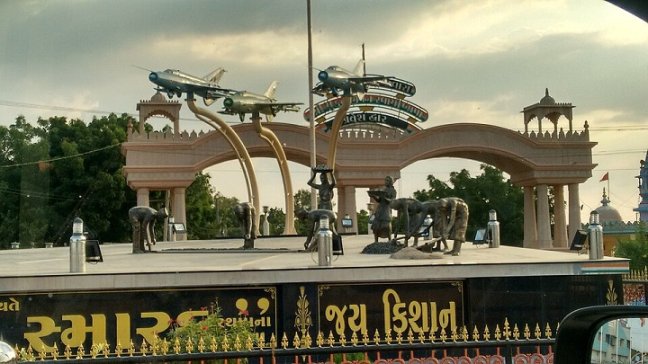
Table of Contents
A Village Built on Legacy and Enterprise
Madhapar’s roots trace back centuries. Local tradition holds that the village was founded by the Mistri community of Kutch, a group historically renowned for its architectural and craft skills, and later shaped significantly by the Kutchi Leva Patel and Lohana communities who form the backbone of its population today. Over generations, residents migrated abroad—to the United Kingdom, the United States, Canada, and several African and Gulf nations—in search of better opportunities. Rather than severing ties with their roots, these emigrants built one of the most robust remittance economies in the country, channeling their overseas earnings back into their ancestral village.
This pattern of “money going home” is the single biggest reason for Madhapar’s extraordinary wealth. It is estimated that well over a thousand families from the village now live abroad, and their consistent financial contributions have funded everything from private homes to public infrastructure, temples, schools, and community halls.
Why Madhapar Is Famous
Madhapar’s fame rests primarily on one striking statistic: the village reportedly holds several thousand crore rupees in bank deposits, spread across roughly seventeen bank branches—an almost unheard-of number for a village of its size. Institutions like the State Bank of India, HDFC Bank, ICICI Bank, Axis Bank, and Punjab National Bank all maintain branches here, competing to serve the deposits of a population that includes a striking number of lakhpatis and crorepatis.
Beyond the banking statistics, Madhapar is known for:
- Its NRI-driven economy, where remittances from the diaspora fund local development, rather than the state or central government carrying the primary burden.
- Its infrastructure, which includes quality roads, schools, colleges, healthcare centers, lakes, and well-built homes—amenities rarely associated with “village” life in India.
- The Virangana Smarak, a war memorial inaugurated in 2015 to honor around 300 women of Madhapar who volunteered to rebuild a bombed Indian Air Force airstrip within 72 hours during the 1971 Indo-Pakistan War, enabling the IAF to resume operations. This act of collective courage remains one of the village’s proudest chapters and a symbol of its community spirit.
- Kari Mori Lake, a scenic local water body that adds to the village’s charm and serves as a gathering spot for residents.
- Rogan art, a traditional textile painting craft associated with the wider Kutch region, with artisans connected to Madhapar contributing to its preservation.
Population, Sex Ratio, and Literacy Rate
According to the 2011 Census of India—the most recent complete village-level enumeration—Madhapar (classified as a Census Town) recorded the following demographic details:
- Total Population: 32,293, comprising 16,276 males and 16,017 females
- Number of Households: Approximately 7,630
- Sex Ratio: 984 females per 1,000 males, notably higher than the Gujarat state average of 919
- Child Sex Ratio (0–6 years): 945, compared to the state average of 890
- Child Population (0–6 years): 3,818, making up about 11.8% of the total population
- Literacy Rate: 85.52%, well above both the Kutch district average of 70.6% and the Gujarat state average of 78.03%
- Male Literacy Rate: 90.50%
- Female Literacy Rate: 80.49%
- Total Literates: 24,352, of which 12,953 were male and 11,399 were female
It’s worth noting that more recent estimates—often cited in news reports—place the village’s current population closer to 90,000, reflecting continued growth in the years since the last census, along with an expansion in the number of households to nearly 20,000. However, these figures are largely drawn from local administrative estimates rather than an official decennial census, so the 2011 data remains the most authoritative baseline for demographic comparison.
Religious Composition
As per the 2011 Census, Madhapar’s population was predominantly Hindu, accounting for approximately 86.22% of residents, with a Muslim population making up around 9.44%, alongside smaller communities of other faiths. This diversity, though modest in scale, contributes to the village’s layered social fabric.
Administrative Details
Madhapar falls under the jurisdiction of the Bhuj Municipal Corporation and is situated in the Kutch district of Gujarat, roughly on the outskirts of Bhuj city. Some key administrative and geographic facts include:
- State: Gujarat
- District: Kutch (Kachchh)
- Governing Body: Bhuj Municipal Corporation
- Total Area: Approximately 43.67 square kilometers
- Elevation: Around 105 meters above sea level
- Coordinates: 23°13’48″N, 69°42’39″E
- Official Languages: Gujarati and Kutchi
- PIN Code: 370020
- Telephone Code: 2832
- Vehicle Registration: GJ-12
Because Madhapar has effectively merged into Bhuj’s urban administrative framework as a Census Town, it enjoys municipal-level services—paved roads, water supply, sewerage systems, and property tax administration—that are typically reserved for larger towns, further reinforcing its reputation as an exceptionally well-developed village.
A Model for Rural India
What makes Madhapar genuinely remarkable isn’t just its wealth—it’s the mindset that sustains it. Despite the affluence flowing in from abroad, the village has largely retained its cultural identity, community values, and sense of collective responsibility. Diaspora members don’t merely send money for personal family upkeep; they actively fund schools, hospitals, temples, and public infrastructure, treating village development as a shared responsibility rather than an individual pursuit.
For policymakers, sociologists, and anyone interested in rural development, Madhapar offers a compelling lesson: that with the right combination of community cohesion, disciplined saving, and diaspora engagement, even a small village can achieve outcomes that rival mid-sized Indian cities. It stands today not just as “Asia’s richest village,” but as a genuine template for what focused, values-driven rural prosperity can look like.
FAQs
1. Why is Madhapar called the richest village in Asia?
Madhapar is known as Asia’s richest village because of the extraordinary bank deposits held by its residents—reportedly over Rs 5,000–7,000 crore—driven largely by remittances from thousands of NRI families with roots in the village.
2. What is the population of Madhapar village?
As per the 2011 Census, Madhapar had a population of 32,293 (16,276 males and 16,017 females). More recent local estimates put the population closer to 90,000, though this isn’t yet confirmed by an official census.
3. What is the literacy rate of Madhapar?
Madhapar has a literacy rate of 85.52%, significantly higher than both the Kutch district average (70.6%) and the Gujarat state average (78.03%), with male literacy at 90.50% and female literacy at 80.49%.
4. What is Madhapar famous for besides its wealth?
Beyond its banking wealth, Madhapar is known for the Virangana Smarak—a memorial honoring 300 local women who rebuilt a bombed IAF airstrip in 72 hours during the 1971 Indo-Pakistan War—as well as its modern infrastructure, Kari Mori Lake, and traditional Rogan art.
5. Which district and administrative body does Madhapar fall under?
Madhapar is located in the Kutch (Kachchh) district of Gujarat and falls under the administrative jurisdiction of the Bhuj Municipal Corporation.