


Chemistry is full of fascinating reactions that reveal the hidden workings of the natural world. One of the most visually striking and educationally rich experiments you can perform — whether in a laboratory or a classroom — is adding an eggshell to nitric acid. This seemingly simple act triggers a cascade of chemical events that touch on acid-base chemistry, gas evolution, salt formation, and even concepts relevant to everyday life, from digestion to environmental science. In this guest post, we explore exactly what happens when eggshell meets nitric acid, the science behind it, and why it matters.
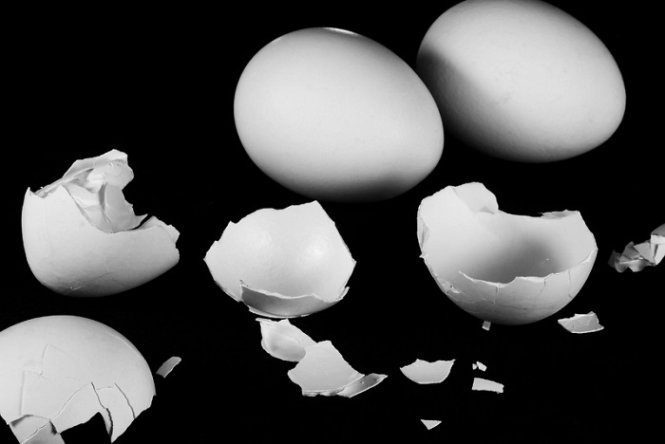
Table of Contents
What Is an Eggshell Made Of?
Before diving into the reaction itself, it is important to understand what eggshell is chemically. An eggshell is composed primarily of calcium carbonate (CaCO₃), making up roughly 94–97% of its dry weight. The remaining fraction includes small amounts of magnesium carbonate, calcium phosphate, and various organic proteins. This high calcium carbonate content is what makes eggshell such a reactive subject when introduced to a strong acid.
Calcium carbonate is the same compound found in limestone, chalk, marble, and seashells. It is a white, crystalline solid that is largely insoluble in water under neutral or basic conditions. However, as soon as it encounters an acidic environment, everything changes dramatically.
The Role of Nitric Acid
Nitric acid (HNO₃) is a highly corrosive and oxidizing strong acid. It fully dissociates in water, releasing hydrogen ions (H⁺) and nitrate ions (NO₃⁻). Because of this, it creates a strongly acidic environment capable of reacting with a wide range of carbonate and metal compounds. Nitric acid is one of the most industrially important acids in the world, used in fertilizer production, explosives manufacturing, and as a chemical reagent in laboratories.
What makes nitric acid particularly interesting for this reaction — compared to, say, hydrochloric or sulfuric acid — is that the resulting calcium nitrate salt is highly soluble in water. This means the reaction proceeds smoothly without the formation of insoluble products that might otherwise coat the eggshell and slow or stop the reaction.
The Chemical Reaction: Step by Step
When an eggshell is dropped into nitric acid, the calcium carbonate immediately begins to react with the acid. The balanced chemical equation for this reaction is:
CaCO₃ + 2HNO₃ → Ca(NO₃)₂ + H₂O + CO₂↑
In plain language: calcium carbonate reacts with two molecules of nitric acid to produce calcium nitrate (a soluble salt), water, and carbon dioxide gas. Each of these products is significant. Let us examine what you would observe and why.
What You Would Observe: The Visible Signs
The moment the eggshell is placed into nitric acid, several things happen simultaneously and visibly. First and most notably, vigorous bubbling occurs at the surface of the eggshell. These bubbles are carbon dioxide gas (CO₂) being rapidly produced as a by-product of the reaction. The fizzing is similar to what you see when you drop an antacid tablet into water, and for a very similar chemical reason.
Second, the eggshell begins to visibly dissolve. The hard, opaque white shell loses its structure as the calcium carbonate is consumed. Depending on the concentration of the nitric acid and the size of the eggshell fragment, this dissolution can take anywhere from a few seconds to several minutes. With concentrated nitric acid, even a large eggshell can dissolve remarkably quickly.
Third, the solution in the reaction vessel may become slightly warm. This is because the acid-carbonate reaction is exothermic — it releases energy as heat. While not dangerously hot in small-scale experiments, this temperature change is measurable and represents the thermodynamic dimension of the reaction.
Finally, once the eggshell has fully dissolved, the resulting solution is clear. This clarity confirms the formation of calcium nitrate, which is highly soluble and remains dissolved in solution rather than precipitating out as a visible solid.
The Products Explained
Calcium nitrate (Ca(NO₃)₂) is a colourless, highly water-soluble ionic salt. It has practical uses as a fertilizer and in concrete manufacturing. When the eggshell dissolves, this salt remains in solution. If the solution were evaporated slowly, white crystals of calcium nitrate would eventually form.
Carbon dioxide (CO₂) escapes as a gas, producing the vigorous effervescence observed. This gas is the same one produced during respiration, combustion, and fermentation. In this reaction, its release is a hallmark of the acid-carbonate interaction — if you were to test the gas using lime water (calcium hydroxide solution), it would turn milky, confirming the presence of CO₂.
Water (H₂O) is generated as a simple by-product of the neutralisation process, adding to the liquid volume of the solution. Though unremarkable on its own, water formation is a classic indicator that an acid-base neutralisation reaction has occurred.
Safety Considerations
It is critical to emphasise that this experiment should only be conducted by trained individuals in a properly equipped laboratory setting. Nitric acid is a highly dangerous substance. Contact with skin causes severe chemical burns, and its vapours are toxic to inhale. Concentrated nitric acid is also strongly oxidising and can react violently with organic materials. Always wear appropriate personal protective equipment including acid-resistant gloves, safety goggles, and a lab coat. The experiment should be carried out under a fume hood to prevent inhalation of CO₂ and any acid fumes.
Broader Relevance: Why This Reaction Matters
The eggshell-nitric acid reaction is far more than a classroom spectacle. It has meaningful connections to real-world phenomena. Acid rain, caused by atmospheric pollution containing nitric and sulfuric acids, reacts with limestone and marble buildings in exactly this way, slowly dissolving their calcium carbonate surfaces over decades. The crumbling facades of historic monuments across Europe are a direct consequence of this same chemistry playing out on a grand architectural scale.
In biology and medicine, acid reactions with calcium carbonate are central to understanding conditions such as osteoporosis and dental erosion, where acidic environments gradually dissolve calcium-rich tissues. Ocean acidification — driven by rising CO₂ dissolving into seawater and forming carbonic acid — threatens marine organisms like coral and shellfish whose skeletons and shells are largely composed of calcium carbonate.
In agriculture, the solubility of calcium nitrate makes it an excellent quick-release fertilizer, delivering both calcium and nitrogen directly to plant roots in forms they can readily absorb.
Conclusion
Adding an eggshell to nitric acid is a deceptively simple experiment that encapsulates a wealth of chemical knowledge. The vigorous bubbling, the gradual disappearance of the shell, and the formation of an invisible salt in solution all tell the story of a classic acid-carbonate reaction. The equation CaCO₃ + 2HNO₃ → Ca(NO₃)₂ + H₂O + CO₂ is elegant in its simplicity, yet its implications stretch from environmental science to human health to industrial chemistry. Next time you hold an eggshell, you are holding one of nature’s most chemically interesting materials — a compact reservoir of calcium carbonate just waiting to react.