

Twelve years after it last hosted the Commonwealth Games in 2014, Glasgow has thrown open its doors again. On the evening of Thursday, 23 July 2026, the XXIII Commonwealth Games officially began at the OVO Hydro arena — and this time, the city did things a little differently. From a Doctor Who-themed entrance to a leaner, more compact sporting programme, Glasgow 2026 is already shaping up to be one of the most distinctive editions of the Games in its 96-year history.
Here’s everything you need to know about the kickoff.
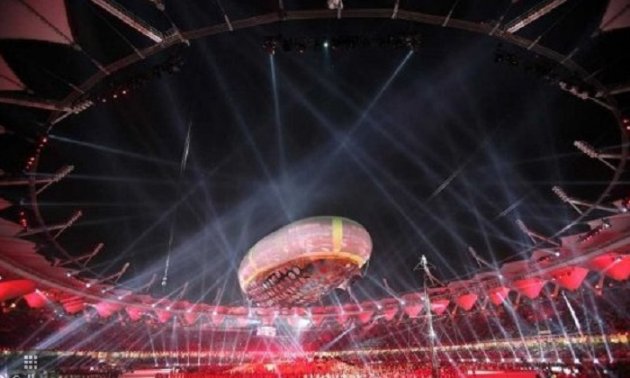
Table of Contents
The Big Picture
- Games: XXIII (23rd) Commonwealth Games
- Host city: Glasgow, Scotland — returning 12 years after the celebrated 2014 edition
- Dates: 23 July – 2 August 2026 (11 days)
- Nations & territories competing: 74
- Athletes: More than 3,000, including Para athletes
- Gold medals up for grabs: 215
- Volunteers: Around 3,000 supporting the Games
- Tickets available: 500,000
How Glasgow Ended Up Hosting Again
Glasgow wasn’t the original host for 2026 — Victoria, Australia was. But the Australian state withdrew in 2023 citing spiralling costs, leaving the Commonwealth Games Federation searching for a replacement. Glasgow, still holding much of its 2014 infrastructure, stepped in as a late but willing candidate. The bid was confirmed in September 2024 and formally approved in October 2024, giving organisers under two years to pull together a scaled-down but still spectacular Games.
A Leaner, More Compact Games
One of the defining features of Glasgow 2026 is its “lighter and leaner” format compared to 2014, when 17 sports were on the programme.
- 10 sports are being contested this year, down from 17 in 2014
- Sports dropped from the previous Glasgow programme include badminton, cricket, hockey and rugby sevens
- Six integrated Para sports are part of the core programme rather than being held separately
- All venues sit within a tight eight-mile corridor, keeping the Games close to the fans
The 10 Sports on the Programme
- Athletics and Para-athletics (track and field)
- Swimming and Para-swimming
- Artistic gymnastics
- Track cycling and Para-track cycling
- Netball
- Weightlifting and Para-powerlifting
- 3×3 basketball and 3×3 wheelchair basketball
- Bowls and Para-bowls
- Boxing
- Judo
The Venues
Everything is happening across just four venues, a big shift from the sprawling multi-venue Games of the past:
- Scotstoun Stadium — athletics and Para-athletics (holding around 11,000, far smaller than 2014’s Hampden Park)
- Scottish Event Campus (SEC) Centre — 3×3 basketball, bowls, boxing and judo
- SEC Armadillo — weightlifting and Para-powerlifting
- Tollcross International Swimming Centre / Glasgow International Arena — swimming, track cycling and other events
Opening Ceremony: A Night to Remember
For the first time in Commonwealth Games history, the opening ceremony was staged entirely indoors, at the OVO Hydro arena rather than a stadium.
- The ceremony opened with a playful nod to Doctor Who, with cycling legend Sir Chris Hoy and actor Greg McHugh “piloting” the TARDIS on a journey across Scottish landmarks before it materialised on stage
- King Charles III and Queen Camilla made their entrance from the TARDIS alongside Hoy, in a moment nobody quite expected
- The Parade of Nations saw athletes from all 74 nations and territories walk out in front of a roaring 13,000-strong crowd
- Team India’s flag was carried by weightlifter Mirabai Chanu, with boxer Lovlina Borgohain bringing in the King’s Baton
- Musical performances came from an all-Scottish lineup: KT Tunstall, Tom Walker, Nina Nesbitt, Callum Beattie, Nathan Evans, Saint PHNX, and electro-Celtic duo Valtos
- Games mascot Finnie, a unicorn, made appearances throughout the pre-show festivities
- King Charles III officially declared the Games open after reading out the King’s Baton message
The King’s Baton Relay
Ahead of the ceremony, the King’s Baton Relay travelled across Scotland from 1–23 July 2026, visiting cities, towns and island communities. For Glasgow 2026, the relay was reimagined so that every competing nation and territory carried its own specially designed baton, with all of them brought together and reunited on stage at the opening ceremony.
What’s Next
- Friday, 24 July marked the start of medal competition, with the first gold of the Games awarded in Para-powerlifting
- Action continues daily through 2 August, when the closing ceremony brings the 11-day celebration to an end
- Coverage is being broadcast globally, including on Sony Sports Network and beIN Sports
Why It Matters
Glasgow 2026 represents something of a turning point for the Commonwealth Games movement. After the turbulence of losing its original 2026 host and years of uncertainty following Durban’s troubled 2022 bid, this scaled-back, cost-conscious edition shows a path forward for a Games event trying to stay relevant and sustainable. Whether the more compact format becomes the new normal for future editions may well depend on how Glasgow 2026 is remembered — and so far, the mood in the city suggests it’s off to a strong start.